Skip to content
HATICE Healthy AgingThrough Internet Counsellingin the Elderly

Collaborative project co-funded by the European Unions' Seventh Framework Programme (FP7, 2007-2013) under grant agreement No 305374.

Flag of the European Union FP7 Cooperation logo

News, page 4 of 5

The pilot has started!

In the Netherlands and Finland, the pilot to evaluate the functionality of the internet platform has recently started. In both countries, 20-30 participants will be recruited to test the platform and give feedback on their experiences using the platform. The first participants have already been included and will be using the platform for the coming weeks. In November, participants will be invited to attend a meeting to share their experiences and suggestions for improvement of the platform.

homepage

Miia Kivipelto guest edits special issue of the Journal of Internal Medicine

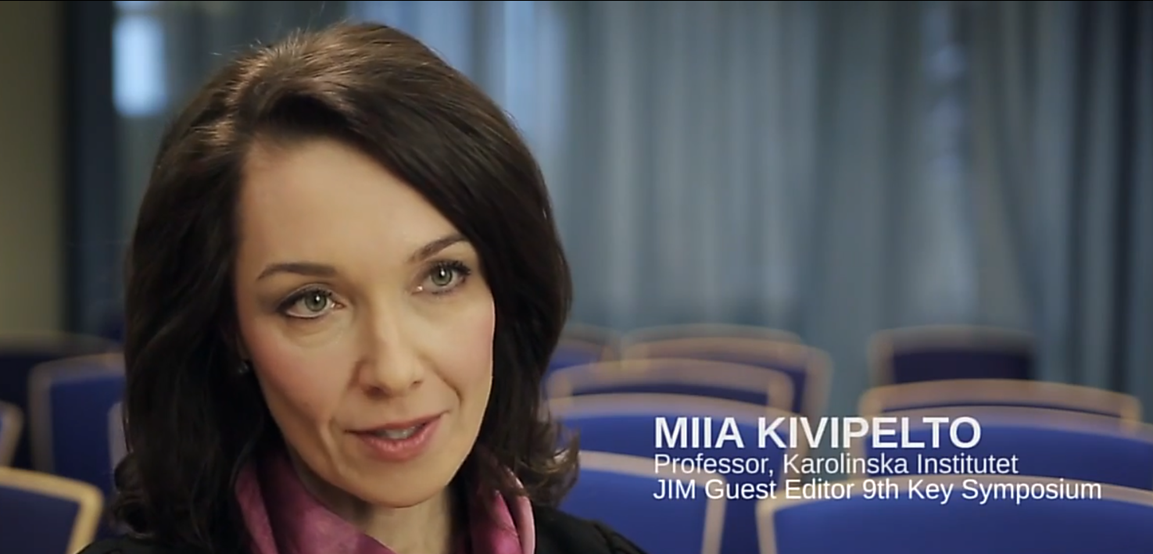
Miia JIM kleinerHATICE researcher Miia Kivipelto is guest editor of the special March issue of the Journal of Internal Medicine, dedicated to “Updating Alzheimer’s disease diagnosis - implications for prevention and treatment.” This was the theme of the 9th Key Symposium, organized by the journal and The Royal Swedish Academy of Sciences and held in Stockholm in December 2012.

During the meeting and in the working groups after the symposium, participants discussed new developments in Alzheimer’s disease diagnosis and the implications these developments have for prevention and treatment of the disease.

Professor Kivipelto chaired the scientific committee that organized the event, which brought together a multidisciplinary group of about 100 researchers and clinicians from Europe and North America, including experts who had a decisive role in defining the new diagnostic criteria for Alzheimer’s disease. Several HATICE researchers participated in the symposium, including Dr. Edo Richard; Professors Laura Fratiglioni, Sandrine Andrieu, and Hilkka Soininen; and Drs. Alina Solomon, Tiia Ngamdu, and Francesca Mangialasche.
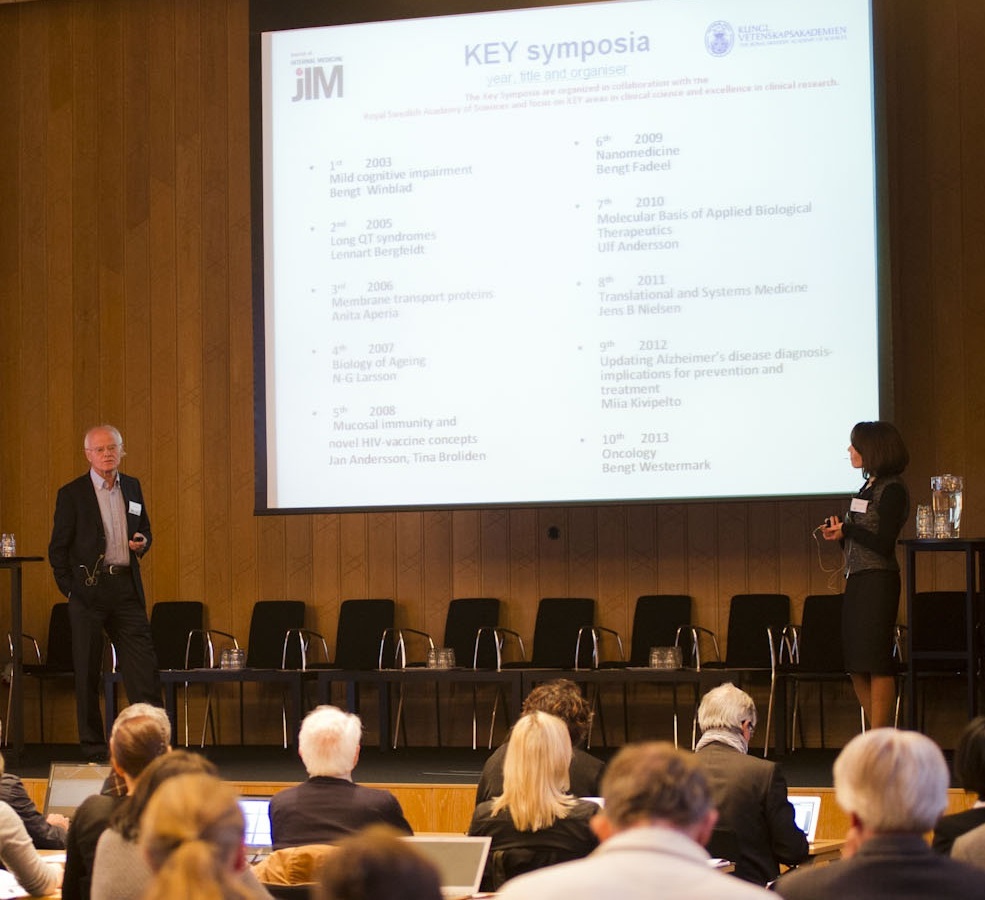
JIM Key 2012 ZIM0017 AlzheimerThe topics discussed are presented in seven articles in the March issue of the Journal of Internal Medicine. Each article provides the authors’ perspectives and a synthesis of the current state of the art. All articles in this special issue of the journal are open-access and can be read at:

http://onlinelibrary.wiley.com/doi/10.1111/joim.2014.275.issue-3/issuetoc.

Watch a film of Professor Kivipelto describing the symposium and the articles at www.jim.se.

The Key Symposia are organized by the Journal of Internal Medicine and The Royal Swedish Academy of Sciences. These international meetings in research areas at the forefront of internal medicine are arranged in honor of Professor Axel Key, pioneer in clinical medicine, member of the Royal Academy, and chair of Karolinska Institutet in the mid-nineteenth century. Professor Key also established the first Swedish medical journal, Medicinskt Archiv, later Acta Medica Scandinavica, and since 1989, the Journal of Internal Medicine.

Miia Kivipelto receives the 2013 Skandia Lennart Levi Prize

HATICE researcher Miia Kivipelto, professor of clinical geriatric epidemiology at Karolinska Institutet will receive the 2013 Skandia Lennart Levi Prize for her research on dementia and Alzheimer’s Disease which has identified several treatable risk factors and thus provide a more optimistic outlook for the prevention and treatment of these diseases. Professor Kivipelto has Kivipeltodemonstrated that high blood pressure, high cholesterol levels, overweight, a lack of exercies and a high intake of saturated fats and alcohol are factors that increase the risk of dementia. 
The Skandia Lennart Levi Prize for health-promotive research was established to mark the 80th birthday of Lennart Levi in 2010 and is to be awarded annually over a period of five years. The candidates are to be internationally outstanding researchers active in Sweden or abroad. The recipients are selected by a panel comprised of professors from Karolinska Institutet. The prize is for SEK 100,000 (11.426 €) and will be awarded at Karolinska Institutet’s installation ceremony on 24 October 2013

Source: Press release Karolinska Institutet June 24 2013

HATICE researchers invited to G8 dementia summit

afbeelding voor bij newsitem G8 dec 2013

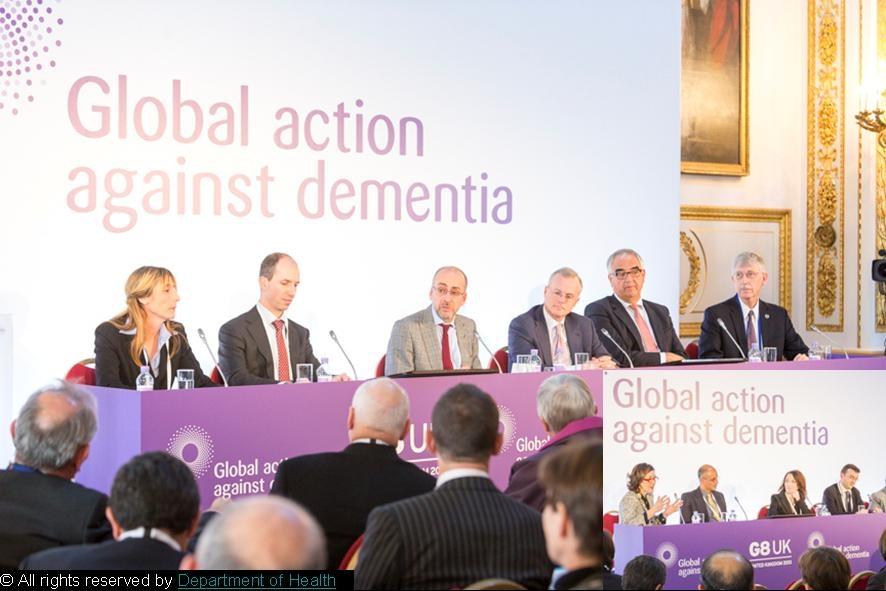
Prof. Miia Kivipelto and Dr. Edo Richard were invited to the G8 dementia summit for their expert opinion on preventing and delaying dementia which was one of the topics discussed. Dr. Richard stated that there is a need to address dementia prevention from a public health perspective and Prof. Kivipelto stressed that we need a life-course approach for dementia prevention strategies.

Encouraging results of the RESPONSE study

Promising results of the RESPONSE study are published in Heart (2013 Jun 28). The randomised controlled trial, coordinated by Ron Peters, cardiologist and member of the HATICE team in Amsterdam, shows that a hospital-based nurse-coordinated secondary cardiovascular prevention programme can add to a small but significant reduction of the 10-year cardiovascular mortality risk. This is encouraging for HATICE since it shows that nurse-led cardiovascular risk management is effective and underlines the importance of addressing lifestyle in prevention initiatives.

**

Encouraging results of the RESPONSE study**
The Dutch multicentre RESPONSE trial (Randomised Evaluation of Secondary Prevention by Outpatient Nurse SpEcialists) conducted by prof. Ron Peters, published promising results in Heart (2013 Jun 28). The randomised controlled trial evaluated the effect of a hospital-based nurse-coordinated secondary cardiovascular prevention programme on top of routine clinical care in 754 patients that recently had suffered from an acute coronary syndrome. Primary outcome was the SCORE 10-year cardiovascular mortality risk at 12 months. 

Nurse-coordinated intervention
People randomised to the nurse-programme visited a cardiovascular nurse 4 times during the first 6 months after inclusion. The programme focussed on healthy lifestyle, risk factor profile and medication adherence. The nurses followed a motivational interviewing course and gave individual counselling for achieving smoking cessation, healthy weight, diet and adequate physical exercise levels. Medication for hypertension and hypercholesterolemia was adjusted in collaboration with the responsible specialist. Special attention was paid at medication adherence. People randomised to the control-arm were provided care as usual. 

Cardiovascular mortality risk reduction
Mean age of participants was 58 years and 80% were men. 73% did not have a history of previous cardiovascular disease before the qualifying admission. At 12 months the mean SCORE risk estimate was 4.4% (SD4.5) in the intervention group and 5.4% (SD6.2) in the control group, showing a small but significant risk reduction for the intervention group. The intervention group showed significant improvement of blood pressure control, LDL cholesterol, physical activity levels and diet. In both groups approximately half of the people smoking achieved smoking cessation at 12 months (data collected by self-report). Interestingly, significantly less cardiac re-hospitalisations occurred in the intervention group compared to the control group (39% vs 61%). 

Conclusion
The study shows that a nurse-coordinated programme for secondary prevention focussing on healthy lifestyle and adherence to medication can effectively reduce 10 – year cardiovascular mortality risk. The data suggest that the programme may also reduce cardiac re-hospitalisations.
RESPONSE includes a different population than HATICE and the intervention is not internet based. Still results are encouraging since they show nurses are successful in cardiovascular risk management and underline the importance of addressing lifestyle in prevention initiatives.